Are Hair Extensions Bad for Thin Hair
Written by webtechs

Are Hair Extensions Bad for Thin Hair?

At last, a solution for thinner hair…Is your hair thinning and you’re wondering if you can get extensions to remedy this issue without additionally damaging your hair? Absolutely! There is a newer hair extension method designed for women with thinner hair.

What is the best hair extensions for thinner hair? Tape in hair extensions! Why? Non-Harmful! Lightweight! Concealed!

Clip-In Extensions are unidealistic for thin hair, they are too hefty to hold.

Hair extensions are perfect for giving you instant length and volume to your natural hair. But what happens when you have thinner hair? There is a worry that by wearing hair extensions, you could damage your hair. Nevertheless, there is a solution for thinner hair.

Types of Hair Extensions for Thin Hair

Discover the different types of hair extension techniques and learn about the best kind of hair extensions for thinner hair:

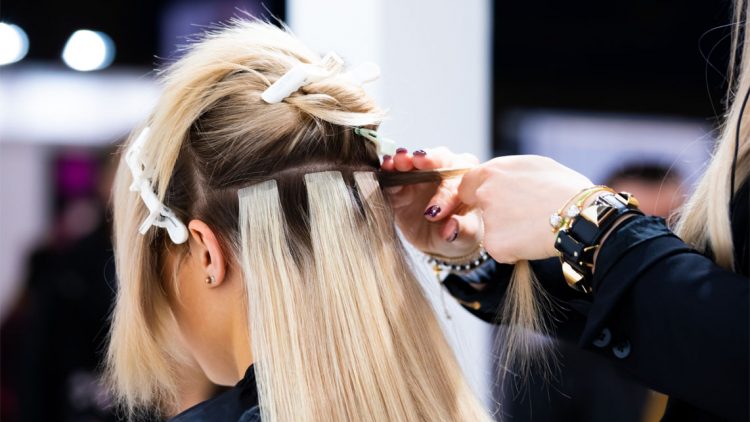
Tape in extensions are a relatively newer method and the BEST for women with thinner or finer hair. The tape extensions are attached to your natural hair using tape (bonded almost likewise to sandwiches among your own hair) and are 1 ½ inch wide wefts applied row after row. The tape wefts are thin and lightweight, without leaving damage. The advantage of this kind of hair extension for thinner hair is that the single technique application can be used as a remedy. Rather than bonding 2 tape weft hair extensions jointly like you would for a traditional tape method, 1 tape weft extension is put on the hair and the other side is sealed using a single-side piece of tape. This is the ideal solution for thinner hair. It offers long wear without damaging thinner hair. Tape in extensions do not necessitate tools or chemicals. Those are what damages your hair down the road.

Clip in hair extensions are short term extensions with the choice to take them out whenever you like. With this kind of extension, it is not going to hold well in thinner hair because of the weight of the clips. Clip in hair extensions are not going to hold with thinner hair since the weight of each weft is truly heavy and they are inclined to slide out, particularly if you want them for everyday use! Additional damage might be caused by the clips putting tension on the thin hair resulting in bald spots. When you want full hair daily, clips are not the ideal option.

Fusion hair extensions utilize keratin bonding on their ends and ultrasonic waves make the keratin pliable to bond throughout application. These kinds of extensions are somewhat expensive, and the installation process is drawn out. The removal procedure is complicated and could pull out more hair down the road. The fusion technique pulls out additional hair and doesn’t hold well in finer hair! Not a good choice for women with thinner hair.

Micro link hair extensions are placed strand by strand to your hair using a special device to apply each hair extension to your natural hair. These links are like a screw that can damage your hair’s shaft when clamped with one another. The weight of the strand yanks and pulls and is going to ruin your hair down the road.

Braided Weft extensions get sewn into your natural hair that is braided to envelop your entire head and the wefts of hair get sewn into the rows. Those with thinner hair typically do not have enough hair to make the braids to hold the extensions.

It is critical to think about how much weight, stress and strain is placed on your natural hair by the extensions. For finer or thinner hair, you need to look for the lightest denseness for hair extensions.

It might appear that strand by strand application could be the lightest weight when getting extensions applied to your hair. However, you need to think about the possible harm to your hair that could be caused by bonding separate pieces of hair to natural thinner hair.

With tape in extensions, the extensions are lighter weight and don’t necessitate glue, devices or fusion kind of bond to remain in your hair. With the single technique application, the extensions are bonded with a piece of tape instead of pinching two extensions together. By doing so, the weight is decreased by half which is ideal for causing the minimum amount of strain and potential damage to thinner hair.

Micro Bead Extensions Versus Tape Extensions: Tape In’s Are Less Harmful

There is also micro tape in hair extensions that are little pieces of separate hair that could be taped in to increase highlights and volume, devoid of altering the natural form of your hair, lessening any chance of impairment to it.

For the more natural, non-harmful hair extension technique for thinner hair, you should think about the tape in hair extension choice for adding volume and length to thinner hair. Just make sure to use the one-sided application technique for thinner hair. This is the solution for thinner hair, those that have thinner hair can at long last get hair extensions.

If you have a preference to the strand-by-strand hair extension technique and you have thinner hair you might want to sample Micro Tape Extensions rather than micro beaded extensions or fusion which cause significant impairment.

Source:

  1. White, A. (2014, November 15). Best hair extensions for Thin Hair. Glam Seamless Hair Extensions. Retrieved October 4, 2021, from https://www.glamseamless.com/blogs/news/15795893-best-hair-extensions-for-thin-hair.

Hair By Nassi Offers Hair Extensions In Mesa & Scottsdale

Looking for hair extensions in Mesa or Scottsdale? Hair by Nassi can help! Contact us today for a free consultation.
How Do Hair Extensions Work?
Written by webtechs

How Do Hair Extensions Work?

The ideal way to get long breathtaking locks is to care for your natural hair, stay away from using heat styling, and never color it … who wants that?! Rather than turning into a slave to their hair, a lot of women are deciding to get hair extensions to add voluptuous volume and goddess length to their hair.

As the cause of this rise in popularity in 2018, hair extension sales burst to one and a quarter billion and it is expected to hit another 20 percent reaching 2022! Like any surge in popularity of a specific product, a plethora of misinformation follows. Many companies even mislead consumers seeking out quality hair extensions.

Consequently, how do they work, and what do you need to look for when you are searching for flawless hair extensions? Hair by Nassi has scoured all the sources out there for the most trustworthy information about how they work and how to find the perfect hair extensions. Read below to learn how to find the best hair extensions for every individual and within budget!

How Do Hair Extensions Work: Discovering Quality Extensions

There are a couple of things to look for when you are seeking to locate a good hair source. Be weary, not every company is going to be completely truthful about the quality of their hair.

What is Remy Hair?

A lot of salons are going to boast that theirs is a hundred percent Remy hair, so what is that saying? Remy hair is genuine human hair that is very healthy and collected with every root at the top and ends at the bottom.

You are able to treat Remy hair if it was your normal hair. You are able to wash it, color it, heat-style it, and it lasts a lot longer than artificial hair!

Non-Remy hair is going to tangle or shed after a while, genuine Remy hair will not. To make sure your source has 100 percent Remy hair (with no artificial hair mixed in) look for up to date reviews from other customers.

Find the Best Hair Texture

Everybody has a different type of hair texture. They can have curly, straight, wavy, thick, thin, and every other type of hair in between. To be sure hair extensions blend in and have a natural look, the extensions need to match the feel of the natural hair.

The origin of the hair utilized in extensions can make a huge difference. Hair from China and India are more frequently to be thicker strands whereas Russian hair is a little finer.

Another thing to think about is hair extensions for women with naturally textured hair. Women that have hair un-touched by chemical relaxers fall into the natural hair texture grouping.

Women that have natural hair also are the largest demographic that purchases hair extensions. A massive seventy percent of the total sales of these extensions are to women that have natural hair! Every educated stylist is going to have some understanding of natural hair and the ideal extensions for those women.

How Do Hair Extensions Work: Application Technique

Another thing to think about is which application technique suits your style of living the best.

Sew-In Extensions

The “old-school” technique of installing almost-permanent hair extensions is in which a stylist will sew wefts of hair to connected micro-braids. Though this technique is usually applied to natural hair, it is also feasible to sew extensions into thinner, straighter hair.

Tape-In Extensions

This is the latest type of almost-permanent hair extensions, and a lot of stylists prefer this technique. Two slender layers of wefts interpose your natural strands and then heat is applied to seal the bond. Don’t wash your hair for three days after installation to guarantee the bond stays secure.

As with any almost-permanent extensions, you’ll need to spend a little time caring for your hair to maintain its chic look, but you can still do all your favorite activities such as going to the gym or the golf course!

Clip-In Extensions

These are the most convenient extensions to apply and take out. For women that like to change up their hairstyles every other day, this is the style of extensions to strive for.

Go from voluptuous goddess waves to a gorgeous bob in no time or add some streaks of colored clip ins for a trendy “paint the town red” look. There are endless possibilities using clip-ins!

Price Comparisons

For the more economical consumers, clip-in extensions are going to get you the best result for little money. Since they can be removed, these extensions are going to last longer than the those bonded to your hair since they are not as fast to get dirty or take damage. Even when you are deciding on clip-ins, keep in mind to look for genuine Remy hair so you are able to color and style it just like your own hair.

The price is not always a sign of high-quality hair extensions, but you are probably not going to find great hair at lower costs. For a total head of hair extensions to add length and volume costs $1,600 to $4,000 for the hair and for a professional install! If you are flexible to settle for partial extensions (and just add volume) the complete cost is going to set you back between $400 to upwards of $800.

Although clip-in extensions are a lot less expensive than their bonded counterpart, they are still going to cost you about $100 for a quality set that is 100 percent genuine Remy hair. There’s no ideal way to get the look of hair extensions at a bargain basement budget. Your hair is going to look stringy or un-natural if you try to use cheaper extensions.

Benefits of Stylist Installed Hair Extensions

Whereas anyone is able to clip in and remove hair extensions, only skilled stylists can cut them to make them integrate with your natural hair. Apart from that, you might be able to notice where your hair ends, and the extensions start.

Another telltale sign is when the extensions don’t match your natural hair color. Who’s better suited to know what color your hair is than the stylist that colored it? Even when you have untouched hair, your stylist is able to notice the distinctive mix of shades in it and custom dye your Remy hair extensions to be a perfect match.

Source:

  1. Camilla MillsCamilla is an experienced Digital Marketing Professional and Salesforce Administrator with a penchant for writing compelling content. She has a passion for researching new trends and topics within the hair and beauty industry. (2021, May 28). How do hair extensions work: Everything you need to know. Salon Iris. https://www.saloniris.com/hair-extensions/.

Hair By Nassi Offers Hair Extensions In Mesa & Scottsdale

Looking for hair extensions in Mesa or Scottsdale? Hair by Nassi can help! Contact us today for a free consultation.
How Long Do Hair Extensions Last
Written by webtechs

How Long Do Hair Extensions Last?

When you invest in something, the first question people ask is, “How long is this going to last?”—if you’re discussing hair extensions, shellac manicures or something as simple as a jar of your favorite night creamer; and for good reason. When you’re spending your hard-earned money on a product, it’s vital to remember how much, and how long it is going to last for you.

The following are the diverse types of hair extensions available and the time each of them are going to last. To help you find out more about the different kinds of hair extensions available, we a e going to give you the facts on what these hair extensions consist of, how long they’re going to last and how you can maintain them so they’ll last as long as they can.

Fusion/Pre Bonded Hair Extensions (three to four months)

Fusion or Pre Bonded hair extensions get attached to the root of your hair with a device that looks somewhat like a hot-glue gun—the device attaches hair to separate strands of your natural hair for a more full, natural-looking appearance.

How Long Are They Going To Last?

These kinds of hair extensions typically last up to three to four months, subject on how well they are taken care of. This will cover how you wash your hair, the number of times you style with heating devices and even using the appropriate hair brush because these extensions are attached to the roots of your natural hair.

How Do I Care For Them?

Whereas you do not need to purchase any specialized hair care products such as shampoos, conditioners, etc, (you can keep using your usual hair care routine)—you do, nevertheless, need to have those hair extensions re-positioned every two to three months.

Tape-In Hair Extensions (four to eight Weeks)

There is no disagreement as to what tape-in extensions are—aptly named, these hair extensions are truly taped together on the sides of your natural hair with an adhesive filling tape. They are somewhat popular since they don’t necessitate heat and additionally lets your natural hair grow-out easily.

How Long Are They Going To Last?

Tape In hair extensions are going to last you somewhere from four to eight weeks. If well taken care of, you could have those same extensions taped back in for a newer look.

How Do I Care For Them?

A vital tip to remember is to, by no means, comb and/or brush your tape-in hair extensions when damp. Be sure to dry thoroughly comb and/or brush them using a brush for hair extensions. This is going to help them last longer and appear more naturally.

Clip-In Hair Extensions (3-6 Months)

In short, clip-in hair extensions are the least harmful, easiest to use and the less permanent kind of hair extension out there. Clip-in hair extensions come in strands that have clips attached to their base that are easy to clip-in to your hair’s natural roots.

How Long Are They Going To Last?

When you routinely use your clip-in hair extensions and keep them well taken care of, they can last you somewhere between three to six months and occasionally even over a year. To reiterate, like all hair extensions this is subject on how they are taken care of.

How Do I Care For Them?

It is suggested to wash them using a sulphate-free, natural product after thirty wears. Be weary of drying them thoroughly prior to you brushing them out as failing to do so might cause breakage and harm making your extensions wear out faster.

Sew-In Hair Extensions (six to eight weeks)

To have your hair extensions sewn-in, you are required t to have your natural hair braided into corn-rows initially and then the extensions would get sewn onto the braids with a needle and thread. People that have thicker hair typically choose to have their extensions sewn-in.

How Long Are They Going To Last?

Sew-In hair extensions are somewhat permanent and would last somewhere between six to eight weeks. It is suggested that the maximum time you should have a full-weave is four months as it could impact of your natural hair’s growth.

How Do I Care For Them?

It is critical to moisturize the scalp, nape in addition to the edges of the weave at a minimum of once a week using a deep conditioning product that aids in moisturizing the hair to keep it appearing healthy and natural.

Microlinks (three to four months)

Also called micro-bead and/or micro-loop hair extensions—these types of extension get applied by collecting small areas of your natural hair and integrating little strands of hair to them. There is not heat or glues required using this technique.

How Long Are They Going To Last?

These extensions would last you for three to four months subject on how well they are taken care of. Since these beads are attached at the root of your natural hair, it is critical to treat them with extra care and utilize natural products.

How Do I Care For Them?

You are able treat these types of extensions like your natural hair and use the same styling products but the same as fusion and/or pre-bonded extensions, your microlink extensions are required to be repositioned every two to three months because your natural hair growth is going to move the microbeads away from you scalp.

Wigs (ten months to a year)

These are probably the kind of hair extensions that people most familiar with and was most likely your intro to the world of extensions. Wigs usually are attached to either a plastic or netted base in which keeps the hair in place, which typically covers your whole head.

How Long Are They Going To Last?

Natural wigs, when well taken care could last up to a year while synthetic wigs last anywhere from four to six months.

How Do I Care For Them?

Stay away from heated styling as much as possible since it could damage the wig and result in faster wear-out. Along with that, you can be sure to not brush your wig when it is damp or wet and store it in a case away from dust in order for your wig to last you longer.

Talking To Your Stylist About Hair Extensions

There is the down-low on the different types hair extensions and how long they could last.

Hair By Nassi Offers Hair Extensions In Mesa & Scottsdale

Looking for hair extensions in Mesa or Scottsdale? Hair by Nassi can help! Contact us today for a free consultation.
How Much Do Hair Extensions Cost at a Salon
Written by webtechs

How Much Do Hair Extensions Cost at a Salon?

Up to this point, we’ve discussed sewn-ins, clipped-ins, taped-ins, glued-ins, etc. But with all the discussion of how much we love extensions, the way they make us look, the way they make us feel, we’ve never discussed about having them professionally done at a salon. And more precisely, how much it is going to cost you.

Now, there are a lot of girls that live their life knowing they can apply their own extensions, wigs, hair dye, etc., on their own at home; but we also know there are girls that fully swear by the salon for the best outcome.

How Much are Salons going to Charge for Hair Extensions?

The answer? It really depends on the type you’re getting, the quality, their length, and how many. The price is also going to vary from salon to salon and stylist to stylist.

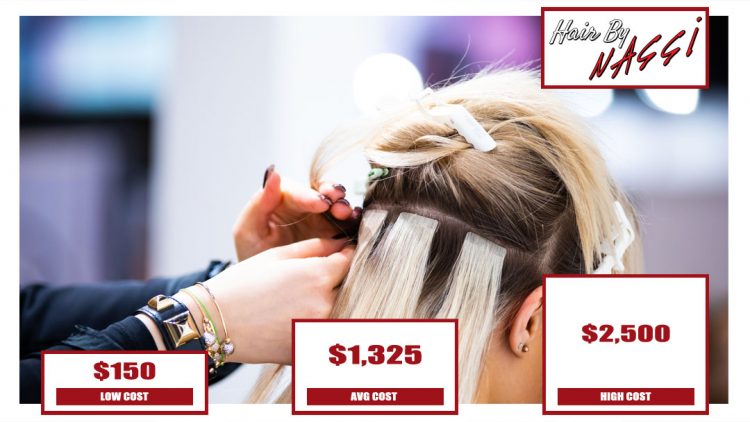
After doing our homework, we discovered that you could expect to pay anywhere from $150 to $2,500, subject to the afore mentioned factors, in addition to where the salon is located, skill or experience of the stylist and the method the stylist applies them.

Statistics report that a partial head of lower-quality hair extensions on their own could cost between $150 – $300, Whereas a higher-quality piece, like the Remy Human Hair could cost from $250-$500 for partials, and $1,000-$2,500 for full.

The following are the national average prices on for extensions from a salon:

  • Sew ins are going to cost: $130 – $200.
  • Glue ins are going to cost: $300 – $500.
  • Tape ins are going to cost: $200+.
  • Clip ins are going to cost: $100 – $500.
  • Bonded are going to cost: $1,500 – $3,000.
  • Micro-bead is going to cost: $200.
  • Fusion is going to cost $200 – $1,000.

Before you lose your mind on how much this is going to cost, you also have to contemplate the cost of doing it on your own at home.

Applying them by yourself at home could almost be as expensive at the end of the day. How is this? For some, or all of the following:

  • When you unintentionally screw up and damage an extension.
  • The expense of color touch-ups and your hair growing out.
  • Added product for the care of your extensions.
  • Purchasing the basics to attach and detach your extensions correctly as required.

Ultimately, you really should weigh the pros and cons. If you’re comfortable applying the extensions at home on your own and know how to do them correctly, it is encouraged you to use clip-ins because they are easy to apply, last longer when cared for correctly, and pose a lot less of a chance to the health of your natural hair.

But if you decide to have a diverse or more permanent set of extensions applied, it is always a good idea to put down a little extra money to guarantee that they are applied properly by a professional and in a way that is not going to not cause you any distress or pain.

Hair By Nassi Offers Color Correction In Mesa & Scottsdale

Hair by Nassi now offers Color Correction in Mesa and Scottsdale, AZ. Hair by Nassi also offers Japanese Hair StraighteningHair Coloring, and Permanent Hair Straightening in Mesa and Scottsdale! You can also find more information about permanent straightening cost and hair highlights cost by reading the blog. Contact us today for a free consultation here or by calling (805) 218-7409.

How to Fix Bad Hair Color From a Salon
Written by webtechs

How to Fix Bad Hair Color From a Salon?

It can be seriously risky coloring your hair. It’s different than a cut, in which, when it goes awry, can be disguised with styling, or even a little bit of grow-out could rectify — the color is there, and after you’ve changed from your natural color, it’s changed, and no sort of up-do will hide that. Don’t panic — there are a couple of things you can do when you’re dissatisfied with your hair color prior to you calling the salon in an uproar (or, maybe, cry).

When you have a colorist that you trust, that’s perfect, but things happen — they move away and you have to find a new colorist, or loss of communication and ending you up with a color job different than what you desired. Even the greatest colorists have their off days, and when working alongside chemicals, it’s challenging to sometimes get precisely what you desire. You might end up leaving the salon appearing way too dark, too light, too blondish, have too many high-lights, not enough high-lights — there is so many different things that could happen that would leave you disappointed.

Your colorist wants you to be happy with your color, and when something is wrong, then you should absolutely go back and get it corrected, but prior to you making any immediate decisions or freak out about it, try these 6 things at home when you are unpleased with your hair color. It might be easy fix.

  1. Wait

Really. Just read a book or something. When you’ve made a drastic change, give yourself some time getting used to it prior to you deciding you’re not happy with it. Additionally, when your hair got highlights and they’re a little too bright, you absolutely want to wait a couple of days up to a week, since highlights may be brighter right out of the salon.

  1. Wash Your Hair

Too dark of a dye job? Wash it. You’ll most likely get a little fade the first time it’s washed (and you might even see some of the color going down drain.)

  1. Use Dish Soap

This is going to dry out your hair so you’ll need to use it along with a good conditioner, but dish soap is tougher than regular shampoo, and could aid in fading color that is too dark a lot quicker. Essentially, it’s sort of like using multiple shampoos all in one.

  1. Use A Purple Shampoo

At the same time, when you received highlights and they appear too brassy, utilize a purple shampoo, in which has cooler pigments to offset the brassy orangish/yellow hues of your hair.

  1. Switch Your Hair Part

When your highlights appear too heavy, move your hair part. Colorists typically place highlights corresponding with your part, so there’s a chance, switching your hair to a different part is going to have less-heavy highlights and show more of your hair’s natural color.

  1. Head Back To The Salon

When what has been listed fails and you’re still not satisfied, head back to the salon. To alter the tone of your hair’s highlights, colorists usually apply a glaze to remove brassiness or place semi-permanent color on their top. When your hair is too dark, they are able to add highlights or use something harsher to strip the color. Color repair is a difficult process in and of itself, so make sure you really require it prior to heading down that road. You can also find a salon that specializes in color correction by searching Google.com for “color correction near me”.

Source:

  1. Fantozzi, S. (2016, March 24). What to do when you don’t like your hair color to avoid the post-salon trauma. Retrieved May 06, 2021, from https://www.bustle.com/articles/149891-what-to-do-when-you-dont-like-your-hair-color-to-avoid-the-post-salon-trauma

Hair By Nassi Offers Hair Color Correction In Mesa & Scottsdale

Looking for color correction services in Mesa or Scottsdale? Hair by Nassi can help! Contact us today for a free consultation.
What is Color Correction?
Written by webtechs

What is Color Correction?

Have you ever jumped into a new look, just to find out the hair color you chose didn’t turn out exactly as you wanted, or it didn’t enhance your skin tone? What about examining your hair color a couple of weeks following your coloring, and finding out that your blonde has started to turn brassy, or your hair is showing traces of red that were supposed to be brunette? Don’t freak out, locate color correction hair services.

Likewise, the way that color-correction is able to cancel out and neutralize irregular pigments in your skin using make-up, color-correction hair services work very similar. When accomplished with a hair toner with multiple uses, such as Shades EQ, it not only is just working to address irregular color, it also addresses when the hair starts to become too warm or cool, light or dark.

Think about the concealer palette: a make-up artist’s go-to. They may use peachish concealers to color correct purplish under-eye circles, dark areas or bruises, likewise to the way your colorist uses pastel peaches to neutralize any remaining bluer tones leftover from using too much purple shampoo with blonde hair. When traces of red are coming through your brown color, silver greens are going to neutralize the red and brighten the brunette.

Occasionally blonde hair color might turn brassy (or appear orangish) after a couple of weeks because of factors that are out of your hands. Anything from minerals in your water to the sun and chlorine may add to the brassiness over time. When brassiness starts to become an issue or the subtle pastel blues you were want turns out with too much vibrance, color correction hair services may be utilized to neutralize your hair.

When receiving hair color correction services, it is critical to work with a stylist you have trust in.

Be open to the technique and trust the colorist. Talk about your expectations honestly prior to the service starting and work with your colorist on a hair color plan of action.

Source:

  1. What is a hair color correction service and how do you know if you need one? (n.d.). Retrieved April 05, 2021, from https://www.redken.com/blog/haircolor/what-is-a-color-correction-hair-service-how-do-you-know-if-you-need-one

Hair By Nassi Offers Hair Color Correction In Mesa & Scottsdale

Looking for color correction services in Mesa or Scottsdale? Hair by Nassi can help! Contact us today for a free consultation.
Written by webtechs

How Much Does Color Correction Cost?

A lot of salons are going to charge around $100 an hour for a hair color correction, subject to on the harshness of your situation, and a consultation is crucial in achieving the look you desire.

Hair Color Correction

What exactly is a hair color correction? There are a lot of kinds of hair color corrections, but the 2 most common color corrections are turning really dark hair a lot more lighter and turning really light hair greatly darker. Have you ever gone to your salon following you coloring your hair with box color and asked to turn it super blonde? Getting your hair to be really blonde following the use of dark color on your hair isn’t as easy as many people believe it is.

A lot of salons are going to charge around $100 an hour for a hair color correction, subject to on the harshness of your situation, and a consultation is crucial in achieving the look you desire. Without fail, book your consultation prior to making a color appointment, particularly if you think you require help correcting an error in your color. Correcting someone’s color doesn’t always need a full-on color correction, then again, having a consultation with your stylist and allowing them to guide you through your options that is going to help you achieve your hair goals AND retains your hair’s health.

Your stylist may also suggest getting a haircut when getting your color correction to eliminate damaged ends.

How Am I Going to Know I Need a Color Correction?

Have you been known to take a big leap on a newer look only to discover that you’re not a fan of the color, or it doesn’t fit your skin tone? Or possibly you examine your hair color a few weeks following you having it done and come to the realization that your blonde has turned really brassy, or your dark brunette turned a little more red than you would like? You might require a color correction.

Concerning blonde being somewhat brassy and brunette appearing to be a little red, you might be able to repair that with a toner assistance, in which your stylist might determine that a glaze is sufficient to correct those small imperfections in your hair color.

When your hair color is not what you desired, nor wanted, seek a professional and let them establish if you require a color correction or not. Your hair stylist might also suggest receiving a deep conditioning treatment or buying a deep conditioner for home use to aid in undoing the damage caused by the coloring of your hair.

Why are Color Corrections so Costly?

Listen up people, color corrections typically take up all of a stylist’s day. This usually means seeing fewer clients, resulting in making less money for that day. Many color correction appointments may take up to six or more hours, and the stylist has to use a ton of color to reach the desired tone. Properly applying the correct color is vital when it comes to repairing someone’s hair throughout a color correction, and it will take time. After your hair has been lightened or you have had your hair lightened with pigment, your stylist still is required to tone you with just the right colors to eliminate brassy tones, greenish tones, reddish tones, etc., in which is a huge step in the color correction process.

Hair By Nassi Offers Color Correction In Mesa & Scottsdale

Hair by Nassi now offers Color Correction in Mesa and Scottsdale, AZ. Hair by Nassi also offers Japanese Hair StraighteningHair Coloring, and Permanent Hair Straightening in Mesa and Scottsdale! You can also find more information about permanent straightening cost and hair highlights cost by reading the blog. Contact us today for a free consultation here or by calling (805) 218-7409.

Types of Hair Extensions
Written by webtechs

Types of Hair Extensions

Clip ins, tape ins, weaves, pre bonded, fusions, micro links…what do they all mean? There are a lot of various styles of hair extensions and terminology, it can get a little overwhelming if you’re new to the universe of extensions. Even though Luxy Hair Extensions are one hundred percent remy human hair clip ins, hair extensions aren’t restricted to this specific type. This post is about the breakdown down the various types of extensions to help get rid of some confusion.

The following post provides details about the different hair extensions and help you make the ideal decision for your hair.

Clip In

Clip in wefts, sometimes called clip in hair extensions, comes in strands of shaped pieces, joined at the base with any one of fabric and/or silicone. The lips are joined to the base and comes plug and play. All you need to do is clip the extensions to your natural hair by yourself! Each clip snaps opened and closed with ease.

Clip in hair extensions is the least permanent type of extension since you can rapidly take them out and reattach them at your leisure. Different than some of the other hair extension applications priorly mentioned, clip ins typically take five to fifteen minutes to apply at your house. Clip ins are also the least damaging since there isn’t any chemicals involved, heat, pressure, or other installation priorly mentioned —they just clip onto your hair easily so there is no damage to your natural hair. This is one of the reasons why it’s one of the most popular type

Tape In

Tape in hair extensions are exactly what they are. The extensions come pre-taped and then taped and/or glued together on each side of your natural hair. Usually, a hairdresser applies tape ins for you since you need to align them with your roots and then applied with a heated device that heats the glue. Furthermore, you would have to have them taken out (with a glue remover) and then reapplied. Obviously, when you apply heat to your hair’s roots and any adhesive product like a tape and/or glue, could cause damage to your hair. This technique typically takes around forty minutes to one hour to apply and when the extensions are in good shape, they may be re-applied.

Weaves

Weave hair is first applied by braiding your natural hair into cornrows, then utilizing a needle and thread to sew the weave into your cornrows. Weave hair extensions are primarily used for individuals with thicker hair because of the way they’re applied. All in all, the weave application is an arduous process (typically a number of hours.) The tight application technique usually strains the scalp and can feel very heavy or awkward, which is the reason it doesn’t work ideally with thin or lighter hair.

This technique is applied by a knowledgeable hairdresser, because it is a very technical and demanding application that is required to be sewn in by an expert. Sew ins are also available in wig form, in which is sewn into cornrows in a comparable way, nevertheless, the hair comes in one piece instead of individual wefts. This kind of hair extension is favorable since it’s the most permanent and complete, because the hair is actually sewn throughout your own hair and can’t come off.

Fusion & Pre Bonded

Fusion hair extensions (sometimes called bonding and/or pre bonded) are fused into your natural hair utilizes various adhesives like glue. The application of pre-bonded hair extensions will take around three to four hours to apply by a stylist. Fusion extensions may not be fitting for all individuals since these kinds of applications is very harmful to your natural hair, so your stylist may even suggest not using this method. The application utilizes a machine that is similar to like a hot glue gun, which basically glues the hair to distinct strands of your natural hair. A different kind of applications for pre bonded hair extensions utilizes a heat clamp to melt the glue to your natural hair.

Micro Link

Micro link hair extensions sometimes called micro bead hair extensions. These are applied by fastening small wefts of hair to tiny sections of your natural hair with a little silicone lined bead. Following that, a specialized device is used to secure the bead to the hair and stiffened to fasten it in place. Even though this technique doesn’t involve heat or glue, if not applied properly by a stylist, micro link hair extensions could be harmful to your hair. The bead might be stiffened too much, triggering pressure and drawing at the roots, and when removed incorrectly, the hair can be pulled out. This technique takes around two to four hours for application.

Wigs & Hair Pieces

Wigs & hair pieces are available in various forms and are applied topically to hair. Long, full wigs are designed to cover your whole head. This also comprises of wigs that are sometimes known as “lace fronts” and/or “netting”—these are just techniques for how the wigs are created. A wig functions as a substitute for your own hair and are designed to cover your whole head. Wigs can be worn for a lot of reasons like hair loss, balding, or simply to alter your look.

different and occasionally come in a bun shape, ponytail, or hair tie so that you can just put it on top of your head. Hair pieces can be utilized if a particular area of your hair is thinning out and you want to put hair on top of this area, or they can just be used to produce a different hairstyle, like a fabulously long, full ponytail with only one piece adding thickness.

Glue-in/Keratin Bond

This types of hair extensions are attached to the hair utilizing keratin bonds that are on top of the extensions, in which are fused using a hot device. This method requires heat for application, and continual visits to the salon to keep them maintained. They can appear great, nevertheless, it is best to stay away using oils, conditioners or any hot styling device since this can impair the bonds and cause the extensions to come out.

How To Talk To Your Stylist About Hair Extensions

No matter of what type of hair extensions you decide on, generally, be sure to have a couple consultations with hair salon technicians to comprehend the total scope of getting permanent hair extensions and if they are appropriate for your type of hair type. Always be sure to look how they appear equally dry and wet, to find out how the hair is going to react on a day to day basis. Always guarantee that your extensions are not applied too tight to your scalp as that could cause strain to your scalp and impair your hair. If you opt for clip-in hair extensions, you won’t have to be concerned about having a technician applying the hair extensions, since you can do it all on your own at home – devoid of damage.

There you have it. Hopefully we’ve provided you all the details you need to make an informed choice on which kind of hair extensions are right for you, your hair style, and your hair objectives.

Hair By Nassi Offers Hair Extensions In Mesa & Scottsdale

Looking for hair highlights in Mesa or Scottsdale? Hair by Nassi can help! Contact us today for a free consultation. Learn more about Balayage highlights.
What is Chemical Hair Straightening
Written by webtechs

What is Chemical Hair Straightening?

Chemical hair straightening changes your curly hair into straight hair by breaking up the natural chemical bonds that originate in keratin — the natural way your hair holds curls. As the bond is breaks, it forces the hair to take on a new shape. In this instance, the curly hair turns into straight hair.

Tell your curls bye-bye.

With the fierce heat of summer right around the corner, our hair is turning frizzier and our self-control to fight it daily is slowly fading. However, prior to you going out and spending a pretty penny on a glamourous new set of locks, look at our hair straightening treatment results for the best investment feasible for your sensuous locks.

5. Flat Iron

Alright, using a flat iron isn’t actually a hair straightening treatment, per se, but for those starting out, a flat iron is the simplest way to subdue frizzy hair awaiting your next shampoo. When you straighten your hair, be sure it’s totally dry, prior to using a flat iron to avoid additional damage to your hair. Because straightening hair can turn hair dry and fragile, be sure to consistently use a heat protective spray and aim to go heat free on days when a straightener isn’t needed.

4. Hair Re-Bonding

Hair re-bonding is a chemical treatment that turns hair straight, lustrous, and smooth. Hair re-bonding comprises of utilizing a cream or relaxant modifier to break down the natural hair composition followed up by a stabilizer to re-bond the composition of the hair again. Re-bonding is perfect for individuals that have problems subduing their winding and/or thick hair, Nevertheless, once hair begins to grow in, the treatment may be easily noticed. As favorable as re-bonding is, it can only be done every so often because it can make hair very brittle and frail. It also needs a lot of hair care upkeep.

3. Chemical Hair Straightening (Hair-Relaxing)

Chemical hair straightening (hair-relaxing) is the method of breaking down protein bonds in your hair. As a specific amount of bonds are broken up in curly and/or wavy hair, it then turns straight. Nevertheless, as straightforward as it sounds, the implementation of it by a professional is vital for it to be successful. For instance, when there are a lot of bonds getting broken hair will go droopy and when there isn’t enough get broken the hair won’t straighten. This hair care method isn’t a joke. However, for people willing to dish out the cash for a quality treatment at a reputable hair salon, the outcome is well worth the money. Be sure to do your homework first.

2. Japanese Hair Straightening (Thermal Reconditioning)

Utilizing both chemicals and heat, Japanese hair straightening is a smoothening and softening treatment that encourages a permanently modified composition of hair. Throughout this treatment, protein bonds in the hair are disentangled and then re-shaped by hair cells. For people that can’t stay still, be advised this is a drawn-out process that involves several steps… around 6 to 8 hours. After a couple of days, you will have to go back to the salon for about an hour or more for the last step. On the bright side, this treatment lasts around 6 to 7 months. As incredible and long term as this treatment comes across as, it can be very harmful to hair in the long term, so be sure to think about this one long and hard.

1. Keratin Hair Treatments (Brazilian Straightening)

Keratin hair treatments are becoming increasingly popular, and with good reason. It is one of the more safe hair straightening methods today. Keratin is a protein that is in our hair already, nevertheless, as protein compositions decrease as we age and an unhealthy diet, so do the levels of keratin. The keratin treatment adds a layer of keratin onto the shaft of the hair supplying it with nutrients that leaves it sleek, sheeny, and straight.

Following a salon professional applying keratin solution to your hair, a 450° flat iron is used to seal in the solution to strands of hair, producing a moisture barrier that decreases frizz and gives hair a shimmery finish.

The greatest part about a keratin treatment is that the hair grows back to its original composition steadily and the treatment can be done over and over without concern about harming the hair. Actually, keratin treatments give better outcomes on repeated treatments. Whereas it’s not the least expensive treatment, it lasts around 6 months, particularly when you follow the treatment with a keratin infused sulfate-free shampoo and conditioner! Enticing, right?

Because everyone’s hair is different, each person will have totally different outcomes. For the best results, make sure to speak with a hair care professional prior to embarking on a permanent straightening experience!

Source:

  1. What is Chemical Hair Straightening? (n.d.). Healthline.Com. https://www.healthline.com/health/beauty-skin-care/permanent-hair-straightening

Hair By Nassi Offers Hair Straightening In Mesa & Scottsdale

Looking for permanent hair straightening in Mesa or Scottsdale? Hair by Nassi can help! Contact us today for a free consultation. Learn more about Keratin Hair Treatments and Japanese Hair Straightening.
How to Disguise Grey Hair with Highlights
Written by webtechs

How to Disguise Grey Hair with Highlights

When clientele start seeing gray hair coming through, they usually pick one of 3 options: enhancing the gray, leaving it how it is or deciding to cover the gray roots. When they are in the latter group and they desire a more natural look, you can in fact use highlights for blending their gray hair, sweeping more brilliant ribbons through locks to mask those silvery meanderers. The outcome? An attractive, seamless finish for salt and pepper tresses; a multi-toned effect that flatters people everywhere, from brunettes to blondes to redheads. Here is how…

Is Gray Hair Able To Be Highlighted?

Indeed, gray hair is able to be highlighted. Just bear in mind that, when you are highlighting gray tresses, the objective is to fuse silver strays and produce an ultra-natural nuance. This can occasionally mean you aren’t applying lightener directly onto each gray hair, but rather lightening the strands surrounding them, which can aid silver pieces to appear indistinguishable.

So, what are the advantages? First and foremost, it means that clientele that adore highlights but want to blend gray hair may get coverage, all without surrendering that desire-worthy, light-reflecting gleam. Integrating gray hair with highlights may also look more organic and youthful than a one shade technique, and make locks seem stockier. In simple terms, the advantages are unlimited.

Should You Color Gray Hair Or Highlight Gray Hair?

The answer to this is subject to the type of coverage and finish the client desires. Are they going for a impede-every-gray-hair result or do they wish to smoothly blend their grays away? Here is how to know at what point you should be going for the tin foil…

Color gray hairs when… your client desires a root shadow that reaches each gray, or they just prefer wearing the same lavish, gleaning shade all throughout their hair. Not everyone wishes for highlights, so a demi permanent, semi permanent or permanent procedure allows them to conceal salt and pepper tresses, at the same time creating a consistent finish.

Highlight gray hairs when… your client already has highlights they want to maintain, or they’re willing to try highlights for their first time in an effort to make silver strays less obvious. Those that want total coverage and highlights might find a double method is best. Meaning root shadow first, followed up by a smattering of multi tonal highlights.

How Do You Merge Gray Hair With Highlights?

Nowadays, there are seemingly limitless ways for the application of highlights. From balayage to baby lights, there is plenty of methods at our disposal – each one providing its own, uniquely flattering result. And, whereas not every method is ideally suited to covering gray hair, many can be adjusted to meet your client’s coveted effect. Here are 4 to try…

1. Conventional Highlights For Gray Hair

Conventional but never boring; classic highlights get applied from root to tip in an even arrangement, then processed in foils to attain a bright, luminous lift. Since they typically start at the root, they enable you to stagger gray regrowth with a couple of lighter pieces, while giving the hair flow and volume. If you are working with blonde highlights, aim for cooler tones, such as ash or icy blonde. That way, they’ll be closer in tone to the organic white, silver, and gray tresses.

2. Balayage For Gray Hair

It’s a misconception that balayage needs to only be swept throughout the mid-lengths and ends of hair. Actually, a couple of strokes beginning at the roots can produce a youthful, bronzed glow. Try to place some brighter pieces through the temples or parting with Blondor Freelights. It’s the go-to tip for clientele with low volumes of gray hair that they desire to blend lightly.

3. Lowlights For Gray Hair

Similar to highlights, lowlights may also be used to conceal gray hair. Actually, they’re ideal for covering gray on brown or red hair for those who are concerned blonde highlights won’t look natural. Strategically place them over gray tresses to add lushness and volume, using a demi permanent color such as Color Touch or – for total coverage – check out permanent Koleston Perfect.

4. Baby Lights For Gray Hair

Micro-fine highlights – more commonly known as baby lights – are perfect for clientele hoping to mask over a small-volume of wisplike grays. They imitate the sun-drenched, natural highlights you used to get on family vacations, and are just intricate enough for blending small, silver tresses away. For coverage on expanded regrowth, you may also paint the baby lights in a row.

Coloring Gray Hair Having Highlights: The Follow Up

Just like all hair that is colored, highlighted grays are required to have follow up nourishing. Make sure clients know precisely how to maintain their highlights looking radiant when leaving the salon.

1. Shook Up Shampoo

Point out that just not any shampoo will do on hair that has highlights. A shampoo that’s developed for colored hair will keep the highlights looking luminous for longer.

2. Try Deeper Treatments

As we age, our scalp creates less oil, in which why gray hair can occasionally feel coarse to the touch. Those who find their hair drier than normal should think about exchanging their conventional conditioner for a mask.

3. Turn The Heat Down

As everyone knows, heat styling could make hair color fade a faster than normal. Nevertheless, not every client wants to hang up their curling iron and/or hair dryer. In cases like that, recommend they use heat protection to protect locks as they style.

Hair By Nassi Offers Hair Highlights In Mesa & Scottsdale

Looking for hair highlights in Mesa or Scottsdale, Arizona? Hair by Nassi can help! Contact us today for a free consultation. Call us at (805) 218-7409 for more information.
1 4 5 6 7